Traditional knitwear continues to hold a quiet but lasting presence within contemporary textile practice. Beyond their functional origins, historical knitting traditions carry distinctive surface languages shaped through repetition, rhythm, and structure.
Gansey knitting, historically associated with fishermen communities along the British coast, remains particularly compelling through its balance of utility and texture. Repeated diamond motifs, structured panels, and vertical lines were developed not only to create durable garments, but also highly recognisable knitted surfaces shaped through repetition and tactile variation.
What continues to resonate within these structures is their understated relationship to ornamentation. Texture becomes the primary visual language, allowing knitted surfaces to remain detailed and expressive without becoming excessive.
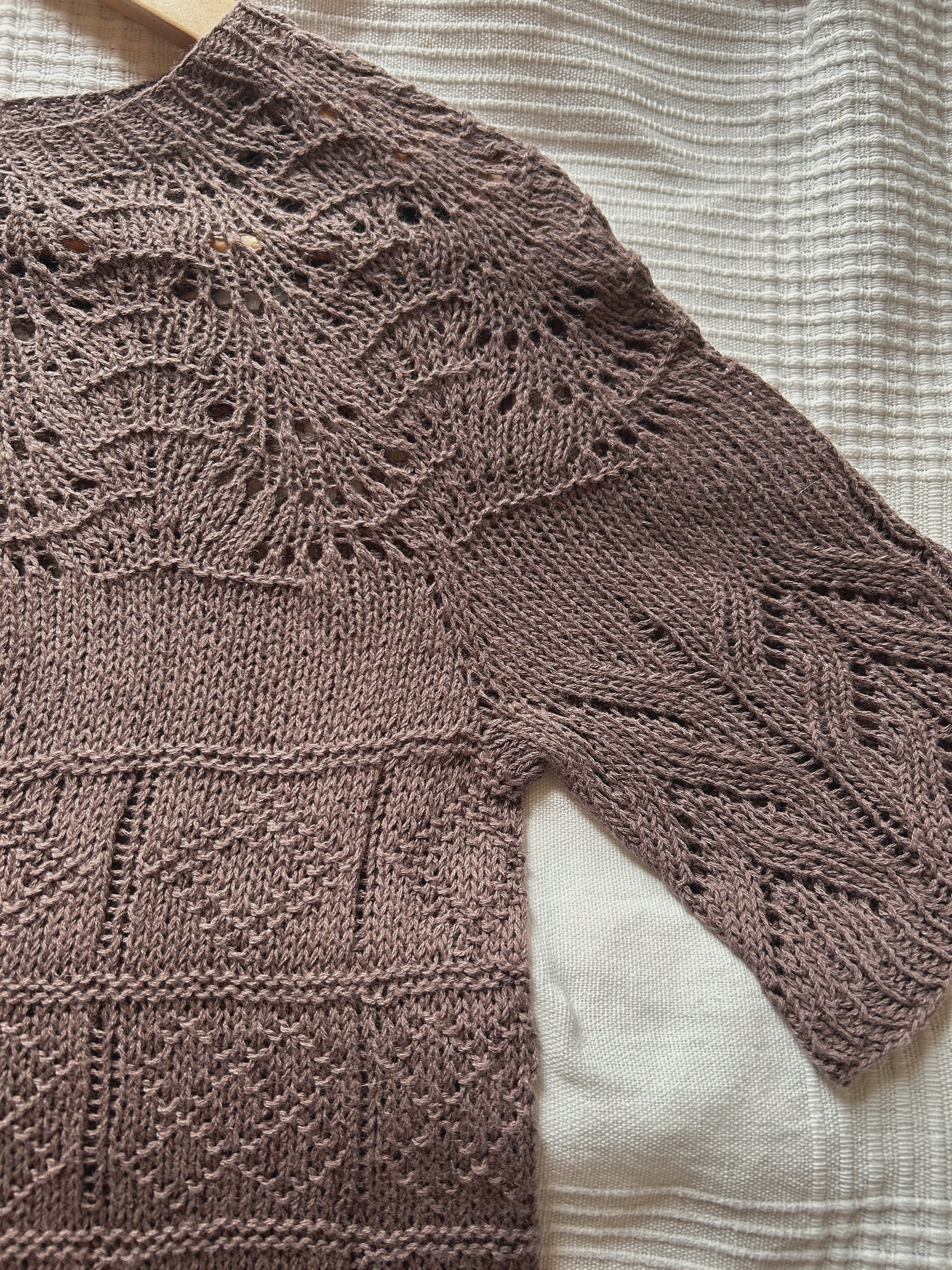
Recent studies have explored how gansey-inspired motifs can shift within lighter cotton constructions and softer contemporary forms. Diamond structures framed by vertical pearl lines introduce rhythm and grounding across the knitted surface, while more open lace sections create contrast through movement and variation in texture.
Worked in cotton, the knitted surface develops a more defined and structured texture while still maintaining softness and flexibility within the material. The relationship between structure, repetition, and lighter surface transitions continues to shape the direction of the studies.
Rather than directly reproducing traditional garments, these references are approached as part of an ongoing textile exploration, allowing historical knit structures to gradually move into softer silhouettes, lighter yarns, and more contemporary knitted forms.